11 Things to 3D Print and Sell for Your Handmade Business

11 Things to 3D Print and Sell for Your Handmade Business
If you own a 3D printer, you’ve probably discovered how easy it is to want to print absolutely everything.
But if you’re building a handmade business, there’s a more useful question:
“What can I print that someone would love to use, keep or give as a gift?”
A small flower could become a pair of earrings. A bookmark could become a personalised teacher gift. A phone stand could be the starting point for a matching desk collection.
You don’t need enormous models or complicated designs. Start with products you can print reliably, finish thoughtfully and package easily.If you’re still deciding whether a printer would suit your business, read my guide to using 3D printing to grow a handmade store.
Here are 11 things to 3D print and sell, with ideas for making each one feel like a finished product.
1. Keychains
Keychains give you plenty of room to experiment on a small scale. Think personalised names, floral motifs, hobby themes or seasonal designs.
Choose a particular customer first. A collection for book lovers will feel more intentional than a handful of unrelated prints, and it gives you a direction for colours and packaging.
Before selling: Check the strength of the attachment point and the quality of the hardware. Your keychain needs to handle life on a set of keys, not just look good in a photograph.

2. Bag Charms and Zipper Pulls
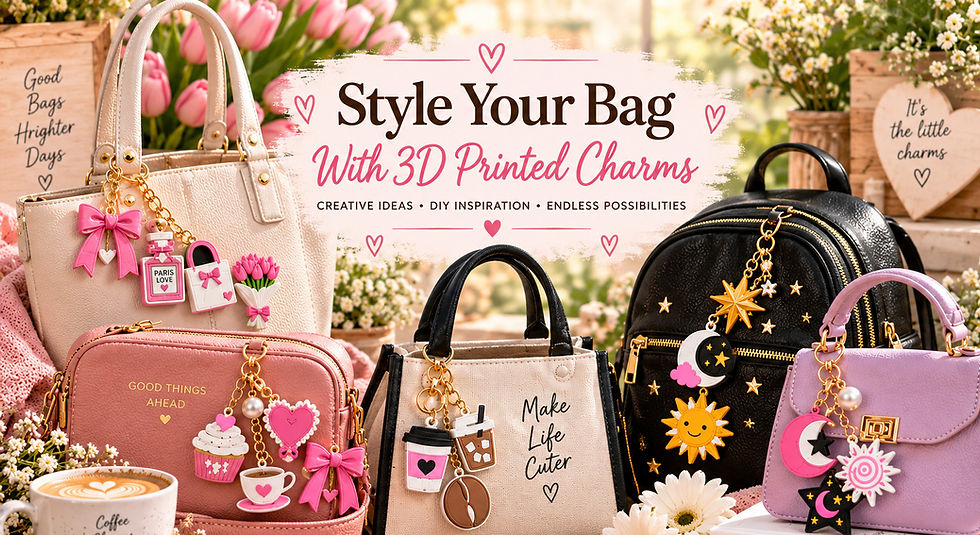
One printed charm can become several different accessories.
Add a clasp for a bag charm, a smaller attachment for a zipper pull or coordinating details for a planner accessory. You’re giving the same component a different purpose through its size, hardware and presentation.
Try photographing it attached to a bag or pencil case. That helps customers understand how they would use it.
Before selling: Check that the finished accessory is comfortable to handle and securely assembled.

3. Earrings and Pendants
Small printed motifs can become earrings, necklaces and bracelet components. Flowers, geometric shapes and bold colour combinations offer plenty of possibilities.
Presentation matters here. Matching hardware and a thoughtfully designed backing card help bring the piece together.
Start with a small selection of colours so you can test what customers respond to before expanding.
Before selling: Check the finished weight, edges and attachment points, and describe your jewellery hardware materials accurately.

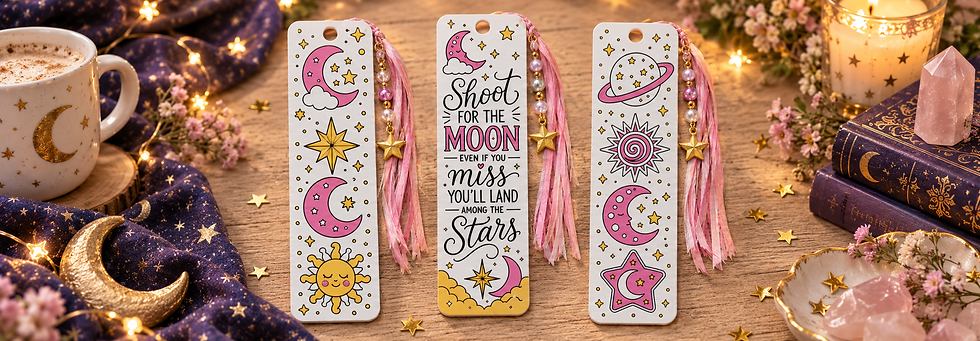
4. Bookmarks
Bookmarks are a lovely option for bookish gifts, teacher presents and personalised products.
Explore names, botanical designs, faith-inspired motifs or seasonal themes. A tassel or ribbon can add texture and tie the colours together.
They also give you an easy way to create related designs: a small floral bookmark range could share a palette while offering different flowers.
Before selling: Try the bookmark inside a book. It should sit comfortably between the pages, with smooth edges and a thickness that allows the book to close.
5. Phone Stands
Phone stands combine a decorative design with an everyday purpose. They can bring a little personality to a desk or bedside table.
I’m currently building a Pen Pal Garden collection using blush pink, warm cream and botanical green, with envelopes, postage stamps, bows and flowers. A phone stand gives those details a home on a practical object.
Before selling: Test stability with the phone sizes and cases you intend it to support. Make the dimensions clear in your listing.
6. Pen Holders
A pen holder doesn’t have to be a plain plastic cup.
It could suit a teacher’s desk, a colourful craft room or someone who loves vintage stationery. Let the intended customer guide the design.
Show it filled with pens or pencils in your product photos so shoppers can judge its size and capacity. A matching phone stand could give you the beginnings of a desk set.
Before selling: Check that it stays stable when filled and that the openings comfortably fit the intended contents.

7. Sticky-Note Holders
Sticky note holders are another practical desk accessory with room for decorative details.
Designing around a common pad size, such as 3 × 3 inches, gives customers a straightforward way to refill it. You can add personality through colour, lettering or a motif that matches other items in your range.
Before selling: Test the fit with a physical pad. Customers should be able to remove notes and replace the pad easily. State whether sticky notes are included.

8. Catch-All Trays
Small trays can hold jewellery, paperclips, keys or craft supplies.
Choose one main use when styling your photographs. A tray beside a bed holding rings tells a different story from one on a desk filled with stationery.
A simple shape can work beautifully when the proportions, colour palette and decorative details feel considered.
Before selling: Check that the base sits flat and the interior is smooth enough for the items it is intended to hold.

9. Coaster Sets
Coasters are a good opportunity to explore coordinating designs.
You could create four related motifs and offer them individually or as a set. A matching holder adds another option without taking the range in a completely different direction.
Think about how the designs look together on a table, as well as individually.
Before selling: Test your material and finish for the intended use, including warm mugs, condensation and cleaning. Provide care instructions based on how the finished product performs.

10. Desk Signs and Personalised Name Plaques
Small signs can become desk accessories, business displays or personalised gifts.
Names, short original sayings and bold decorative elements give you plenty to work with. Keep the lettering readable at the actual size you plan to print.
For custom orders, offer a manageable selection of fonts, colours and text lengths.
Before selling: Print a sample with the longest name or message you allow. This helps you check readability and spacing before accepting orders.

11. Plant Markers and Decorative Stakes
Plant markers, pot signs and decorative signs and stakes give you a way to design for gardeners and indoor plant lovers.
Try a coordinating herb label set, botanical shapes or personalised pot signs. Photograph them in a pot so customers can see their proportions.
Before selling: Decide whether the product is for indoor or outdoor use, then choose and test your material accordingly. Include dimensions and care information in the listing.

Check the Licence Before Selling Your Prints
If you’re using someone else’s 3D print design, read its licence before offering physical products for sale.
Check whether commercial sales are permitted and what conditions apply. Permission to sell finished prints does not necessarily include permission to share or resell the digital files. You should also check the current rules of your selling platform.
At Artistry by Anna, eligible commercial use designs allow customers to sell the finished physical products they personally print, subject to the applicable licence. Always check the terms for the individual design.
Choose a Small Range to Start With
You don’t need to make all 11 products.
Choose two or three that suit the same customer, calculate your costs, including finishing time, hardware and packaging and make a few samples.
A bookmark and matching keychain could be your first small gift range. A phone stand and pen holder could become your first desk set.
The printer creates the component. You create the finished product.
Looking for designs you can print and turn into products for your own handmade business?
Explore my commercially licensed 3D-printable designs. My collections include commercially licensed printable designs that makers can turn into coordinated gifts, jewellery and desk accessories.
Happy printing!


Comments